


AI for B2B: How Artificial Intelligence is Transforming Business-to-Business Operations
Artificial Intelligence (AI) is revolutionizing the B2B (business-to-business) landscape, enabling companies to streamline operations, improve decision-making, and enhance customer experiences. From intelligent automation to predictive analytics, AI is empowering businesses to scale efficiently and stay competitive in an increasingly digital world.
In this blog, we will explore:
✔ How AI is transforming B2B operations
✔ Key use cases of AI in B2B industries
✔ Challenges and considerations for AI adoption
✔ Future trends shaping B2B AI
🧠 How AI is Transforming B2B Operations
Unlike B2C (business-to-consumer), where AI is often used for personalized recommendations and chatbots, B2B AI focuses on:
- Process Automation (e.g., invoicing, supply chain management)
- Data-Driven Decision-Making (e.g., predictive analytics, sales forecasting)
- Customer Experience Optimization (e.g., AI-powered customer support)
With the increasing demand for efficiency, B2B companies that integrate AI reduce costs, enhance accuracy, and improve productivity.
📌 Key AI Use Cases in B2B
1️⃣ AI for Sales and Lead Generation 📊
🔹 AI-driven lead scoring helps sales teams prioritize high-potential customers
🔹 Chatbots & Virtual Assistants handle customer inquiries 24/7
🔹 AI can automate email marketing campaigns, improving engagement rates
🔹 Predictive analytics forecast future sales trends
Example:
🔸 HubSpot & Salesforce use AI to score leads, personalize outreach, and automate customer interactions.

2️⃣ AI for Customer Support & Service 🤖
🔹 AI-powered chatbots improve response times & reduce support costs
🔹 Sentiment analysis detects customer dissatisfaction in real-time
🔹 Automated ticketing systems streamline helpdesk operations
Example:
🔸 Zendesk & Freshdesk use AI to analyze support tickets and automate responses, reducing resolution time.
3️⃣ AI for Predictive Analytics 📈
🔹 AI-driven business intelligence (BI) tools provide deep insights
🔹 Predictive analytics forecasts demand & inventory needs
🔹 AI helps companies detect patterns in large datasets for strategic decisions
Example:
🔸 Google Analytics & Tableau use AI-powered analytics to identify trends and optimize business strategies.
4️⃣ AI for Supply Chain & Logistics 🚚
🔹 AI improves demand forecasting to reduce supply chain disruptions
🔹 AI-powered route optimization enhances delivery efficiency
🔹 Robotic Process Automation (RPA) automates warehouse management
Example:
🔸 Amazon & UPS use AI for real-time inventory tracking and predictive logistics.
5️⃣ AI for Cybersecurity & Fraud Detection 🔐
🔹 AI detects anomalies and potential cyber threats
🔹 AI-powered fraud detection identifies suspicious transactions
🔹 Machine learning helps automate security risk assessments
Example:
🔸 IBM Watson & Darktrace use AI-driven security analytics to identify cyber threats in real-time.
🚀 Challenges & Considerations for AI Adoption
Despite its potential, AI implementation in B2B faces several challenges:
1️⃣ Data Quality & Availability – AI relies on high-quality, structured data for accurate predictions.
2️⃣ Integration with Legacy Systems – Many B2B companies use outdated software that AI may struggle to integrate with.
3️⃣ High Implementation Costs – Developing AI solutions requires investment in infrastructure & expertise.
4️⃣ Ethical & Privacy Concerns – Businesses must comply with GDPR, CCPA, and other data privacy laws.
💡 Solution: Companies should start with small-scale AI projects, gradually integrating AI into critical business areas.
🔮 Future Trends in B2B AI
🔥 AI-Powered Hyper-Personalization – AI will provide highly personalized B2B customer experiences.
🔥 Conversational AI & Voice Assistants – More businesses will use AI-driven voice assistants for B2B sales & support.
🔥 AI & Blockchain Integration – Enhancing security, transparency, and fraud prevention in transactions.
🔥 No-Code & Low-Code AI Platforms – Making AI accessible to non-technical business users.
🎯 Conclusion: Why B2B Companies Must Embrace AI
AI is no longer a luxury—it’s a necessity for B2B companies looking to stay competitive. From predictive analytics to intelligent automation, AI is reshaping the way businesses operate.
✅ If your business wants to improve efficiency, enhance customer experience, and scale operations, integrating AI is the next logical step.
🚀 Are you ready to implement AI in your B2B business? Let’s discuss how AI can transform your operations!
❓ FAQs
1️⃣ What is the role of AI in B2B marketing?
AI automates lead generation, email campaigns, and customer segmentation, helping businesses reach the right audience with personalized messaging.
2️⃣ How can AI improve B2B customer service?
AI-powered chatbots and virtual assistants provide instant responses, reducing human workload and improving customer satisfaction.
3️⃣ What are the best AI tools for B2B companies?
- Sales & CRM: Salesforce Einstein, HubSpot AI
- Customer Support: Zendesk AI, Freshdesk AI
- Business Analytics: Google Analytics, Tableau AI
- Cybersecurity: IBM Watson, Darktrace AI
4️⃣ Is AI expensive for B2B companies?
AI adoption can be costly initially, but cloud-based AI solutions (e.g., OpenAI, Google Cloud AI) offer affordable pricing for small and mid-sized businesses.
5️⃣ What is the future of AI in B2B?
AI will continue to enhance automation, predictive analytics, and personalization, making businesses more efficient and data-driven.
🚀 Want to integrate AI into your B2B business? Contact us to get our AI partners help you to explore AI solutions tailored for your company!

Summary of Cathie Wood’s Big Ideas 2025 Presentation
Introduction
Cathie Wood, CEO and CIO of ARK Invest, presents Big Ideas 2025, an in-depth analysis of emerging disruptive technologies and their impact on industries worldwide. This report highlights groundbreaking advancements in AI, robotics, energy storage, genomics, blockchain, and space technology, driving exponential economic growth and investment opportunities.
1. AI – The Catalyst for Innovation
Artificial Intelligence (AI) remains the primary driver of innovation across industries:
- Autonomous Coders: AI’s capability in coding projects surged from 3% in 2023 to an expected 100% by the end of 2024, enhancing developer productivity exponentially.
- Drug Discovery: AI has accelerated research efficiency by 10X, significantly reducing drug development costs and timelines.
- Self-Driving Technology: Tesla plans to launch a fully autonomous service by June 2025, surpassing competitors like Waymo in commercialization.
2. Robotics & AI Integration
AI-driven robotics is reshaping industries with rapid advancements in automation:
- Humanoid Robots: Robotics is evolving quickly, with applications in homes and manufacturing.
- Market Growth: The industry is projected to be worth $26 trillion, revolutionizing automation and labor markets.
- Convergence of Technologies: AI, energy storage, and robotics are collectively unlocking new automation opportunities.
3. SpaceX & Reusable Rockets
Space exploration is accelerating with SpaceX leading the charge:
- Reusable Rocket Technology: SpaceX reduced turnaround time from one year to two weeks.
- Growing Satellite Economy: Expected to generate $132 billion in revenue, further expanding global connectivity.
4. Blockchain & Crypto Adoption
The crypto revolution continues to expand:
- Bitcoin Institutionalization: ARK forecasts Bitcoin reaching $1.5M due to increased institutional adoption.
- Stablecoin Transactions: Surpassed Visa and Mastercard in value, processing $15 trillion in 2023.
- Decentralized Finance (DeFi): Blockchain is transforming financial systems, reducing reliance on traditional banking.
5. Multiomics & Gene Editing
Advancements in biotechnology are set to revolutionize healthcare:
- CRISPR & AI: These technologies are transforming gene therapy and leading to cures for sickle cell disease and Type 1 diabetes.
- Shift from Chronic to Curative Medicine: Traditional treatments focus on disease management, but gene editing offers permanent solutions.
- Biotech R&D Growth: Expected return on investment to rise from single digits to 15-45%, due to innovative breakthroughs.
6. The Future of Economic Growth & Stock Market
Disruptive technologies are reshaping global economic landscapes:
- GDP Growth Acceleration: Expected to increase from 3% to 7-8%, driven by innovation.
- Stock Market Impact: The value of disruptive innovation in equities is projected to surge from $12 trillion to $140 trillion.
- Magnificent 6 (Mag 6) Tech Giants: Expected to quadruple in value, though some may face disruptions from emerging competitors.
Conclusion
Cathie Wood highlights that disruptive innovation is here, driving economic transformation and wealth creation. Investors and businesses should embrace these advancements to stay ahead of the curve. Download the full Big Ideas 2025 report from ARK Invest for a comprehensive analysis of these groundbreaking trends.
Stay Updated on the Latest Innovations!
For more insights on emerging technologies and market trends, visit our blog.


New UK Regulations on Cryptoasset Investments: What You Need to Know
The UK’s financial regulator, the Financial Conduct Authority (FCA), has expanded its financial promotions regime to provide enhanced protections for UK users investing in cryptoassets. From 8 October 2023, all cryptoasset firms marketing to UK consumers, including prominent platforms like Coinbase, will have to comply with new regulations. This move aims to ensure that UK users are more informed about the risks involved in investing in cryptoassets.
Notice to Users in the UK:
Given the high-risk nature of cryptoasset investments, the Financial Conduct Authority (FCA) has issued a warning to all UK investors:
“Due to the potential for losses, the FCA considers this investment to be high risk.”
Key Risks You Should Be Aware Of
- You Could Lose All the Money You Invest
- Cryptoassets are known for their high volatility. Their value can plummet as quickly as it can rise, meaning you could lose all the money you invest. Due to the largely unregulated nature of the cryptoasset market, there is also a risk of losing your cryptoassets due to cyber-attacks, financial crime, or the failure of a firm you invest in.
- No Protection if Something Goes Wrong
- The Financial Services Compensation Scheme (FSCS) does not protect cryptoasset investments because they are not considered “specified investments” under UK law. If you invest in cryptoassets, you will not be protected by the FSCS in case of failure.
- Additionally, the Financial Ombudsman Service (FOS) cannot help with poor investment performance. They can only consider complaints against FCA-regulated firms.
- You May Not Be Able to Sell Your Investment
- There is no guarantee that you can easily sell your cryptoassets at any time. Factors such as market supply and demand play a major role in determining the ability to sell. Operational issues, such as technology failures, cyber-attacks, or fund mishandling, may cause delays, making it difficult to liquidate your investment when you need to.
- Cryptoasset Investments Can Be Complex
- Cryptoasset investments can be difficult to understand, especially for first-time investors. Before making any investments, you should conduct thorough research and only invest in products you fully understand. If something seems too good to be true, it likely is.
- Don’t Put All Your Eggs in One Basket
- Putting all your money into one type of investment is risky. Diversifying your investments across different assets can help mitigate risks and reduce your dependency on a single investment. A prudent rule is not to invest more than 10% of your total wealth in high-risk assets like crypto.
How to Protect Yourself
If you are keen to learn more about protecting yourself while investing in cryptoassets, the FCA’s website is a great place to start. The website offers valuable resources to help you understand the risks and make informed decisions.
For further information about cryptoassets, the FCA provides detailed information about asset risks, including various categories of cryptoassets. Make sure you read and understand these risk summaries before proceeding with any investment.
Remember: Not All Cryptoassets Are Alike
Before making any investment, ensure you understand the specific risks involved with the asset you’re considering. Different types of cryptoassets have different levels of risk, so it’s crucial to research and be aware of the potential downsides before you invest.
阅读更多中文内容: 英国新法规:加密资产投资的风险与保护措施

Key Highlights from the 2025 UK-China Economic and Financial Dialogue: Green Finance and Beyond ✦
The 11th UK-China Economic and Financial Dialogue (EFD) recently took place in Beijing, marking a significant milestone in the bilateral relations of two major global economies. Co-chaired by Chinese Vice Premier He Lifeng and UK Chancellor of the Exchequer Rachel Reeves, this high-level platform is a critical mechanism for discussing strategic, global, and long-term economic and financial issues. Held after a nearly six-year hiatus, this session addressed vital themes such as green finance, capital market connectivity, trade and investment, and energy collaboration. The dialogue underscored the importance of fostering a stable and mutually respectful partnership, generating positive momentum for the global economy.
Financial Collaboration: Advancing Green and Innovative Growth 🌱💳
The financial sector took center stage during the dialogue, with an emphasis on green finance and innovation. Recognizing the critical role of finance in driving sustainable development and future growth, both sides achieved several notable agreements.
Green Finance Milestones
Green finance emerged as a cornerstone of the discussions. The UK and China celebrated progress in the UK-China Green Finance Taskforce and pledged deeper collaboration in green bonds, transition financing, and biodiversity funding. A landmark announcement was China’s plan to issue its first-ever sovereign green bond denominated in RMB by 2025, to be listed in London—a move that strengthens London’s role as a leading offshore RMB hub.
Enhanced Financial Regulation
Both countries reaffirmed their commitment to enhancing dialogue on financial stability, consumer protection, and digital financial innovation. Future collaborations will also focus on cryptocurrency regulation and combating financial crimes. To achieve this, they will expand annual bilateral regulatory forums and share expertise in risk management and resilience.
Capital Market Connectivity
The dialogue reinforced the success of the UK-China Stock Connect initiative, which has enabled Chinese companies to raise over $6.6 billion on the London Stock Exchange. China encouraged eligible firms listed on the Shanghai and Shenzhen exchanges to issue Global Depository Receipts (GDRs) in London, further deepening the connectivity between the two financial markets. Additionally, both nations agreed to advance bond market integration, allowing international investors to trade and settle RMB bonds in the UK time zone.
Talent Exchange and Training
Recognizing the importance of talent in driving financial cooperation, the UK and China agreed to launch the UK-China Chevening Financial Scholarship Program. This initiative aims to facilitate the exchange of expertise among senior financial professionals, fostering innovation and collaboration.
Trade and Investment: Broadening Opportunities 🚢💼
The dialogue also focused on expanding bilateral trade and investment, emphasizing industrial cooperation and market access.
Agricultural and Food Market Access
Significant progress was achieved in agricultural trade, including:
• Resuming pork exports from two UK companies to China.
• Advancing discussions to finalize the Greasy Wool Protocol by 2025.
• Accelerating protocols for pet food exports and chemical fertilizer registrations.
Digital Economy and Industrial Collaboration
Both nations committed to enhanced dialogue on standards, regulations, and policies in sectors like the digital economy, green technologies, and automotive industries. This collaboration will create a favorable environment for companies operating in these high-growth sectors.
Services Sector Market Access
The dialogue emphasized fair treatment for foreign companies. China will further ease restrictions on foreign law firms, allowing them to operate more freely in the Chinese market. Professional certifications and licenses, such as those for accountants and architectural firms, will also see increased mutual recognition, facilitating smoother operations for service providers in both nations.
Energy and Climate: Partnering for a Green Future 🌍⚡
Energy and climate cooperation was another priority topic, with both sides committing to joint efforts in clean energy transitions and carbon market alignment.
Clean Energy Transformation
China and the UK agreed to strengthen collaboration in offshore wind energy, hydrogen technologies, and energy storage solutions. These efforts aim to accelerate their transition to cleaner energy systems.
Carbon Market Integration
The UK welcomed China’s nationwide carbon trading system and expressed interest in aligning on carbon border adjustment mechanisms (CBAM). Both nations aim to drive global consistency in carbon market regulations.
Low-Carbon Technology Sharing
Through policy alignment and technological exchange, the UK and China will work together to transform high-carbon industries, paving the way for sustainable growth.
Why This Dialogue Matters ✨
The 2025 UK-China Economic and Financial Dialogue reflects the resilience and adaptability of bilateral cooperation amidst a challenging global economic environment. It has not only strengthened ties between the two nations but also set a precedent for addressing pressing global challenges like climate change and economic uncertainty. Key takeaways include:
• Green Finance Leadership: Collaboration on green bonds and biodiversity financing offers new avenues for businesses and investors focused on sustainability.
• Trade and Investment Facilitation: Eased market access in agriculture, services, and digital sectors provides expanded opportunities for companies on both sides.
• Energy and Climate Synergy: Joint projects in clean energy and low-carbon technologies will help both nations achieve their climate goals while fostering innovation.
This renewed partnership lays the groundwork for stronger economic ties and sustainable development, offering a hopeful blueprint for global collaboration in the years to come.
FAQs
1. What were the main topics discussed during the UK-China Economic and Financial Dialogue?
The dialogue focused on green finance, financial market integration, trade and investment, and energy and climate cooperation.
2. What is the significance of China’s first RMB-denominated green bond?
This bond, to be issued in 2025 and listed in London, marks a milestone in UK-China green finance collaboration and enhances London’s status as a global RMB hub.
3. How will the dialogue impact international investors?
The deepened capital market connectivity and bond market collaboration will provide international investors with more opportunities and streamlined processes for accessing Chinese markets.
4. What agreements were reached on energy and climate cooperation?
The UK and China committed to joint projects in clean energy, carbon market alignment, and low-carbon technology sharing.
5. How does the dialogue support professional talent in finance?
The introduction of the UK-China Chevening Financial Scholarship Program will facilitate knowledge exchange and foster innovation in the financial sector.
[中文版请见此处 (Chinese Version Here)]


Why UK Property Isn’t the Golden Investment It Once Was 🏡 #HousingCrisis #UKProperty
UK Housing Crisis: Why British Properties Are Losing Value #HousingCrisis
For years, owning property in the UK—particularly in London—has been considered a safe, prestigious, and lucrative investment. The allure of stable returns, a thriving rental market fueled by financial, educational, and tourism hubs, and the charm of historic architecture have drawn investors from around the globe. However, beneath this glossy surface, cracks are beginning to show.
A recent study by the UK-based think tank Resolution Foundation has delivered a sobering verdict:
“UK housing is the least valuable among developed economies.”
Let’s unpack this claim and explore why Britain’s housing market, despite its high costs, offers far less in return than many international counterparts.

The High Price of Limited Space 🏠💰
One of the key findings of the Resolution Foundation report is that British homeowners pay more and get less—both in terms of space and quality. Let’s take a closer look:
1. Tiny Living Spaces
The UK provides the smallest living area per person among major developed economies. The average per capita living space is a mere 38 square meters, which is:
- Smaller than Japan (40 sqm),
- France (43 sqm),
- Germany (46 sqm), and
- Significantly smaller than the spacious homes of the United States (66 sqm).
For a country that prides itself on modern living, this statistic paints a cramped picture of British housing.
2. Aging Properties
Nearly 38% of British homes were built before 1946, making them some of the oldest housing stocks in the developed world. To put this into perspective:
- Italy, known for its “€1 old house” schemes, has just 21% pre-1946 housing.
- Spain fares even better, with only 11% of homes built before the same period.
While these old homes may have historical charm, they also come with challenges such as poor insulation, higher energy costs, and safety concerns due to structural aging.
Costly to Maintain and Rent 🏚️🔧
Aging homes aren’t just inconvenient—they’re expensive. Poor insulation and leaky structures mean higher utility bills and more frequent maintenance, which ultimately raise housing costs. Here are some startling findings from the report:
- 22% of household spending in the UK goes toward housing-related expenses, compared to the OECD average of 17%.
- This makes the UK one of the costliest housing markets among developed nations, second only to Finland.
The burden extends to renters too. Even if the entire housing stock were made available for rent, British tenants would still face inflated costs, compounded by hidden fees for maintenance and other services.
The Rise of “For-Profit Social Housing” 🏢📈
The UK government and public institutions have struggled to tackle the housing crisis, leading to the rise of for-profit social housing providers (FPRPs). These private organizations, which now dominate the sector, have redefined the social housing landscape:
- In the last decade, the number of FPRPs has tripled.
- By 2028, their housing portfolios are expected to grow to 86,000 units, according to real estate consultancy Savills.
FPRPs appeal to investors by combining financial returns with social impact. Just like pension funds, these investments offer low-risk, long-term returns, thanks to the steady demand for affordable housing.
Key players in this space include major asset managers like Blackstone, as well as smaller, speculative investors. With 62% of social tenants living in the same home for over a decade, these properties represent a stable, profitable venture.
Why the UK Housing Crisis is Hard to Solve 🔄
Despite the growing role of private firms in the social housing sector, structural issues persist:
- The age and quality of British housing stock mean that substantial investment in upgrades is required.
- Regulatory oversight has increased, leading to higher compliance costs for landlords and housing associations.
- Public institutions alone cannot meet the growing demand for affordable housing, pushing more people into private rental markets.
Renovation: A Key to Unlocking Value 🔨🏡
For those who already own property in the UK, renovation is often the best way to improve living conditions and increase long-term value. However, navigating the complex world of home improvement can be daunting.
Key factors to consider include:
- Hiring the right professionals to ensure high-quality work.
- Balancing aesthetics with functionality to appeal to future buyers or tenants.
- Understanding local building regulations to avoid costly delays or fines.
Companies like Hyde International have stepped in to offer one-stop renovation services tailored to the needs of Chinese investors and homeowners in the UK. These services not only enhance comfort for current residents but also boost property values significantly.
The Future of UK Housing: Challenges and Opportunities 🌍🏘️
The UK housing market is at a crossroads. While the statistics highlight its shortcomings, the demand for housing remains high, driven by population growth and immigration. As the market evolves, opportunities for innovative solutions, such as sustainable housing designs and private-public partnerships, will play a crucial role in addressing the crisis.
Investors and homeowners alike must adapt to these changes, focusing on long-term strategies that prioritize quality, sustainability, and affordability.
Conclusion: A Market in Transition 🔄📉
The UK’s housing market is no longer the “golden investment” it once was. Rising costs, limited space, and aging properties have eroded its appeal compared to other developed economies. However, with the right strategies—whether through renovation, smart investments, or social housing partnerships—it is still possible to navigate this challenging market successfully.
As Britain faces its housing reality, one thing is clear: solving the crisis will require innovation, collaboration, and a commitment to quality over quantity.

CIIE Matchmaking Conference
CrossBorderBoost Joins CIIE 2024 Matchmaking Conference to Benefit Global Service Providers
We are thrilled to announce that CrossBorderBoost (CBB) will participate in the 7th China International Import Expo (CIIE) from November 6-9, 2024, at the National Exhibition and Convention Center (NECC) in Shanghai. As one of the world’s largest import exhibitions, CIIE offers an unparalleled platform for networking and access to a wide range of industries.
What This Means for You – Our Service Providers
CBB’s participation at CIIE is an incredible opportunity to help you expand your professional services internationally. Our goal is to connect businesses from across the globe with experts like you in finance, marketing, legal, IT, and more. By joining CBB’s activities at the expo, you will gain direct exposure to global buyers, investors, and enterprises eager to collaborate.
Key Benefits for You:
- Direct Access to Global Clients
CBB will actively participate in the CIIE Matchmaking Conference, a platform that connects us with businesses searching for cross-border services. By aligning with us, you’ll engage in one-on-one matchmaking sessions with international buyers needing expertise in areas such as finance, compliance, marketing, and IT. This targeted exposure ensures that you reach potential clients across various industries. - Strengthened Global Presence
Partnering with CBB at CIIE elevates your visibility in the global service industry. You’ll be seen by enterprises seeking solutions in fields like HR management, event planning, environmental services, and more. This visibility can result in long-term contracts and stable relationships with international clients. - Exclusive Investment Insights
During the investment promotion sessions, CBB will gather essential information about China’s investment policies, regional business environments, and strategic industries. These insights will help align your services with expanding enterprises looking to invest in China or enter the Asian market. - Comprehensive Service Offering Promotion
At CIIE, CBB will showcase its full spectrum of services, including:- Financial and Tax Services
- Marketing and Branding
- Legal and Compliance Services
- IT and Technical Support
- Human Resources and Employee Management
- Event Planning and Coordination
- E-commerce and Digital Services
- Environmental and Sustainability Services
- Administrative and Operations Management
Elevating Your Global Visibility
At CIIE, your services will be marketed directly to high-potential clients. CBB’s AI-driven matchmaking technology ensures that we connect you with businesses that match your skillset. Additionally, we’re engaging with industries such as finance, technology, healthcare, and e-commerce, all of which are in high demand for the type of services you provide.
How to Get Involved
As a CBB Pro, you have an incredible opportunity to grow your business and reach new markets. We encourage all of our service providers to stay involved as we prepare for this exciting event. If you have any questions or would like to explore further collaboration opportunities at CIIE, feel free to reach out to us.
Let’s seize this moment to grow together and showcase your professional services on the world stage!

Elevate Your Professional Skills with LSE Executive Education!

🚀 Elevate Your Professional Skills with LSE Executive Education! 🚀
We are thrilled to present the Chinese Language and Culture for Business (CLCB) Flexi Programme, an exceptional course crafted by the London School of Economics (LSE) to propel your career in the global business arena. This exclusive programme provides personalised one-on-one lessons, tailored to fit your schedule and offering unparalleled flexibility and convenience.
Programme Details:
- Duration: 40 hours of personalised instruction
- Validity: 5 months
- Start Date: Flexible, based on your availability
- Additional Benefits: Optional two-week study trip to China during the summer
This unique opportunity is designed to deepen your understanding of Chinese business culture and enhance your professional skills. Whether you’re looking to enter the Chinese market, strengthen your language skills, or gain insights into Chinese business practices, the CLCB programme is your gateway to success in a globalised world.
Why Enrol in the CLCB Programme?
- Master Business Chinese: Acquire practical language skills tailored for business contexts.
- Cultural Competence: Navigate the complexities of Chinese business culture with confidence.
- Global Networking: Connect with a diverse group of professionals from around the world.
Don’t Miss Out—Early-Bird Discount Ends Soon!
Take advantage of our early-bird discount, available until Monday, 26th August 2024. With just three days left to secure your spot at a reduced rate, now is the perfect time to invest in your professional development.
🔗 Claim Your Discount & Enrol Today!
Act quickly—this exclusive offer expires in just three days!
Programme Fees:
Please see below for the final prices after the early-bird discount:
- On-Campus CLCB: £2,677.50 (15% off)
- Online CLCB: £1,350 (10% off)
Note: The application process takes 2-3 working days. We encourage you to apply as soon as possible to ensure we can assess your language level.
Contact Us for code!
Visit our recent webinar at LSE @ CIBL:


Check our other corporate deals here!
We want to welcome you to our community, where you’ll find more offers like these! And the best part? It’s completely free!
To explore more on how cross-border business is evolving, join our community – we’re just getting started on this exciting journey.
Sign up now and claim your free eSIM data plan!
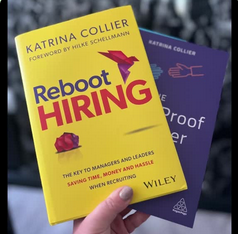
Exciting Opportunity for Hiring Managers: Win a Copy of Reboot Hiring
Exciting Opportunity for Hiring Managers: Win a Copy of Reboot Hiring 📚
We have some exciting news to share with our corporate community. Aylin has just received her copy of Reboot Hiring 📙, a fantastic book recently launched by Katrina Collier. 🌟
Katrina Collier has made a remarkable impact in the recruitment field, championing human-centric growth and ensuring that recruitment remains a personal and empathetic process. We’re thrilled to see Aylin quoted in not just The Robot-Proof Recruiter 📙, but now in Reboot Hiring 📙 as well. 🤩
This book is a practical guide designed for leaders and hiring managers navigating the complexities of recruiting. It’s perfect for:
- 🌟 Talent Professionals looking to enhance their hiring strategies
- 🌟 Founder CEOs aiming to understand modern recruitment practices
- 🌟 Hiring Managers seeking practical, hands-on advice
Who should buy it?
- Talent Professionals who can gift it to hiring managers
- Founder CEOs
- Hiring Managers
Competition Alert! 🎁
To celebrate, Aylin is gifting a copy of Reboot Hiring to a deserving hiring manager. If you know someone who could benefit from this book, comment below with their name and why you think they should win. We’re happy to ship this anywhere in the world 🌍, so don’t let location hold you back!
The winner will be randomly selected at 16:00 BST on Tuesday.
[Links to purchase both books will be provided in the comments]
Don’t miss out on this opportunity to gain valuable insights into effective hiring practices. Good luck to everyone!
Check our other corporate deals here!
We want to welcome you to our community, where you’ll find more offers like these! And the best part? It’s completely free!
To explore more on how cross-border business is evolving, join our community – we’re just getting started on this exciting journey.
Sign up now and claim your free eSIM data plan!

Strategic Expansion: How Asian Businesses Can Successfully Enter Global Markets
Translated from: https://chuhaikaite.com/asian-businesses-expanding-western-markets-strategies-case-studies Read 10 case studies using the translation icon at the top of the page.
Key Strategic Resources for Asian Businesses Expanding into Global Markets & Case Studies
UnExpanding into Global Markets: Key Strategies for Asian Businesses

Introduction
Expanding into global markets presents significant opportunities for Asian businesses. However, it also comes with challenges that require careful planning and strategy. This guide outlines key strategies to help Asian businesses navigate these complexities and achieve long-term success.
Understanding Global Business Practices
Local Business Practices
To succeed in Global markets, it is crucial to understand local business practices. Publications like Harvard Business Review and McKinsey provide valuable insights into global business strategies and regulatory frameworks. By studying these resources, Asian businesses can adjust their models to meet global consumer and stakeholder expectations.
Adopting Best Practices
Implementing global best practices in sustainability, corporate social responsibility (CSR), and governance is essential. Adopting these practices demonstrates a commitment to responsible business operations, which is highly valued by Western stakeholders. Aligning with Western governance models helps build trust and establish long-term relationships with investors, customers, and regulators.
Navigating Regulatory Challenges
Compliance with Local Laws
Entering global markets requires a thorough understanding of local laws and regulations. Resources such as Business for Social Responsibility (BSR) and the World Economic Forum provide comprehensive overviews of legal challenges. Ensuring compliance helps avoid legal risks and protects the company’s reputation.
Managing Cross-Border Risks
Effective risk management is crucial, particularly for Environmental, Social, and Governance (ESG) risks. These resources help Asian businesses develop robust risk management strategies that align with global expectations, thus mitigating potential risks.
Adapting to Cultural Differences
Importance of Cultural Insights
Cultural differences can significantly impact market entry success. Understanding these differences is key to tailoring products and services to meet global consumers’ specific needs. Resources like the Global Health Institute and World Health Organization (WHO) offer valuable insights into health, wellness, and cultural trends.
Managing a Diverse Workforce
Operating in a multicultural environment requires effective employee management strategies. Articles from Sustainable Brands and The Guardian provide practical advice on managing global employees, emphasising the importance of diversity and inclusion. Adopting these strategies helps create a positive work environment, boosting employee satisfaction and productivity.
Building a Sustainable Business Model
Growing Demand for Sustainability
Sustainability is a key concern for global consumers and governments. Integrating sustainable practices into the business model is crucial. Resources like the World Economic Forum and McKinsey offer guidance on developing sustainable strategies that resonate with global audiences. These practices include environmental responsibility, ethical sourcing, and CSR.
Forecasting Market Trends
Staying ahead of market trends is essential for maintaining a competitive edge. Reports and articles from WHO and the World Economic Forum on sustainability and health can help predict changes in consumer preferences. Proactively addressing these trends allows businesses to differentiate themselves and attract a broader customer base.
Enhancing Competitive Advantage
Benchmarking Against Global Competitors
Benchmarking is an effective method for understanding successful global market strategies. Case studies and reports from Harvard Business Review and McKinsey provide insights into global business successes and failures. This benchmarking process helps optimize strategies and improve operations.
Fostering Innovation and Adaptation
Innovation is key to market success. Global resources offer extensive knowledge on cutting-edge research and business strategies. By leveraging these resources, Asian businesses can spark new ideas and adjust their products or services to better meet global consumer needs. Continuous innovation is essential for remaining relevant and competitive in dynamic Western markets.
Key Resources for Asian Businesses
Essential Publications and Platforms
To effectively address global market complexities, Asian businesses can utilise key resources, including:
- Harvard Business Review: In-depth analysis and case studies on global business practices and strategies.
- McKinsey & Company: Research and insights on global business trends, including sustainability and governance.
- Sustainable Brands and The Guardian: Focus on sustainability, employee management, and cultural trends.
- WHO and World Economic Forum: Comprehensive reports on global health, wellness, and sustainability trends.
These resources are indispensable for Asian businesses aiming to align with global standards and achieve long-term success.
Real-World Case Studies
Examples of Successful Expansion
Case studies of Asian businesses that have successfully expanded into global markets provide valuable lessons. These examples highlight strategies for overcoming challenges, addressing cultural differences, and establishing sustainable business models. Studying these cases offers insights into effective strategies and how to apply similar approaches in expansion efforts.
Common Challenges and Considerations
Pitfalls in Cross-Border Expansion
Despite the opportunities, Asian businesses should be aware of common pitfalls in market expansion. These include underestimating cultural differences, failing to comply with local regulations, and overlooking the importance of sustainability. Understanding these challenges helps develop strategies to mitigate risks and avoid costly mistakes.
Ongoing Learning and Adaptation
Successful expansion requires continuous learning and adaptation. As global markets evolve, businesses must stay informed about new developments, trends, and regulatory changes. Ongoing learning and adaptability are crucial for maintaining a competitive advantage and achieving long-term success in Western markets.
The Future of Asian Businesses in Global Markets
Emerging Trends in Global Expansion
Asian businesses’ future in global markets will be influenced by emerging global trends. These include increasing emphasis on sustainability, digital transformation, and the growing importance of ESG factors. Leading these trends can help Asian businesses establish a strong foundation for success in the evolving global markets.
Importance of Sustainability and ESG
As global consumers and governments prioritise sustainability and ESG factors, aligning strategies with these values is crucial. This alignment is not only essential for meeting regulatory requirements but also for building a strong brand reputation and gaining trust from global stakeholders.
Conclusion
Expanding into global markets offers significant opportunities but also presents challenges. By leveraging strategic resources, adapting to local business practices, and prioritising sustainability, Asian businesses can navigate these complexities and achieve long-term success. Continuous innovation and adaptation are key to staying competitive and establishing a strong presence in global markets.
Recommendations for Future Expansion
- Focus on Sustainability: Integrate sustainability into operations and products to gain acceptance in global markets.
- Adapt to Local Practices: Understand and adapt to global business practices, including cultural and regulatory considerations.
- Leverage Partnerships: Build partnerships with local companies to navigate regulations and gain market insights.
- Innovate Continuously: Keep innovating to meet evolving consumer needs and maintain a competitive edge.
By following these recommendations, Asian businesses can enhance their chances of success and establish themselves as global leaders.

Protect your brand with Tramatm.com and get 30% OFF using code HUBPAL30
🚀 Unlock Exclusive Savings with Tramatm! 🚀
Are you ready to safeguard your brand and elevate your business to new heights? We’re excited to announce a fantastic opportunity to protect the heart and soul of your business with Tramatm.com! For a limited time, enjoy an incredible 30% discount on all trademark registration and IP legal services.
🌟 Use Code: HUBPAL30 🌟
🔗 Shop Now: Tramatm.com
Why Choose Tramatm?
- Simple, Fast & Affordable: Register your trademark online in just three easy steps.
- End-to-End Protection: From initial risk assessment to full registration, Tramatm handles it all with expertise.
- Global Coverage: Benefit from worldwide protection with experienced trademark attorneys who are dedicated to your success.
- Transparent Pricing: Enjoy clear and upfront fees with no hidden costs.
Our Services Include:
- Trademark Registration: Starting from £350. Secure your brand with our money-back guarantee.
- IP Legal Services: Starting from £140. Receive comprehensive legal support, including a free consultation.
- Trademark Watch: From £140/year. Benefit from 24/7 monitoring to ensure your brand remains protected.
What Sets Us Apart?
- 96.90% Success Rate: Achieve a high application success rate compared to the industry average of 64.40%.
- Rapid Amazon Brand Registry: Register in just 1-2 weeks, as opposed to months with others.
- 21339+ Satisfied Clients: Join a thriving community of happy customers who trust Tramatm for their trademark needs.
How It Works:
- Trademark Verification: Get results within 24 hours with a free lawyer’s check.
- Filing the Registration: A straightforward 3-5 day process with legal representation.
- Assessment: IPO examination with a 3-12 month period.
- Certification: Receive your trademark certificate with 10 years of validity upon successful registration.
Why Register a Trademark?
- Stand Out: Differentiate your brand from the competition and establish a unique identity.
- Protect Your Investment: Ensure no one else can benefit from your hard-earned reputation and creativity.
🎉 Don’t miss out on this exclusive offer! Use code HUBPAL30 at checkout to enjoy a 30% discount on all services.
👉 Explore Tramatm.com and secure your brand today!
✨ Peace of mind and global protection await with Tramatm. ✨

CROSSBORDER CURRENCY NEWS 
READ BY TAGS 







 Our Collaborations With 80+ Leading Companies & Associations